Writing as an Advent practice

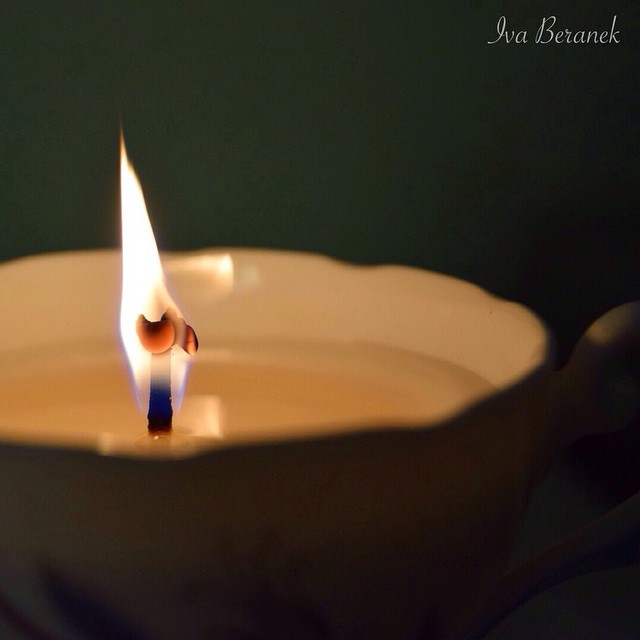
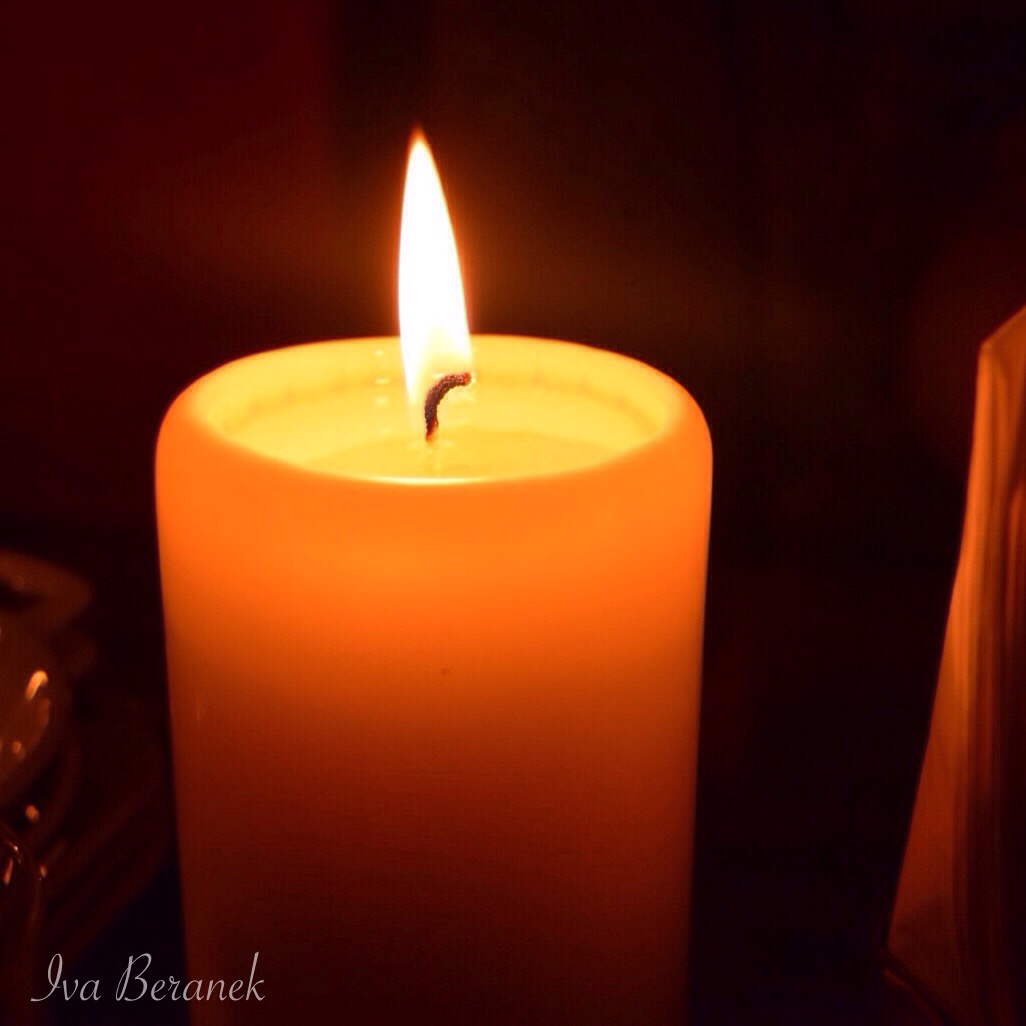
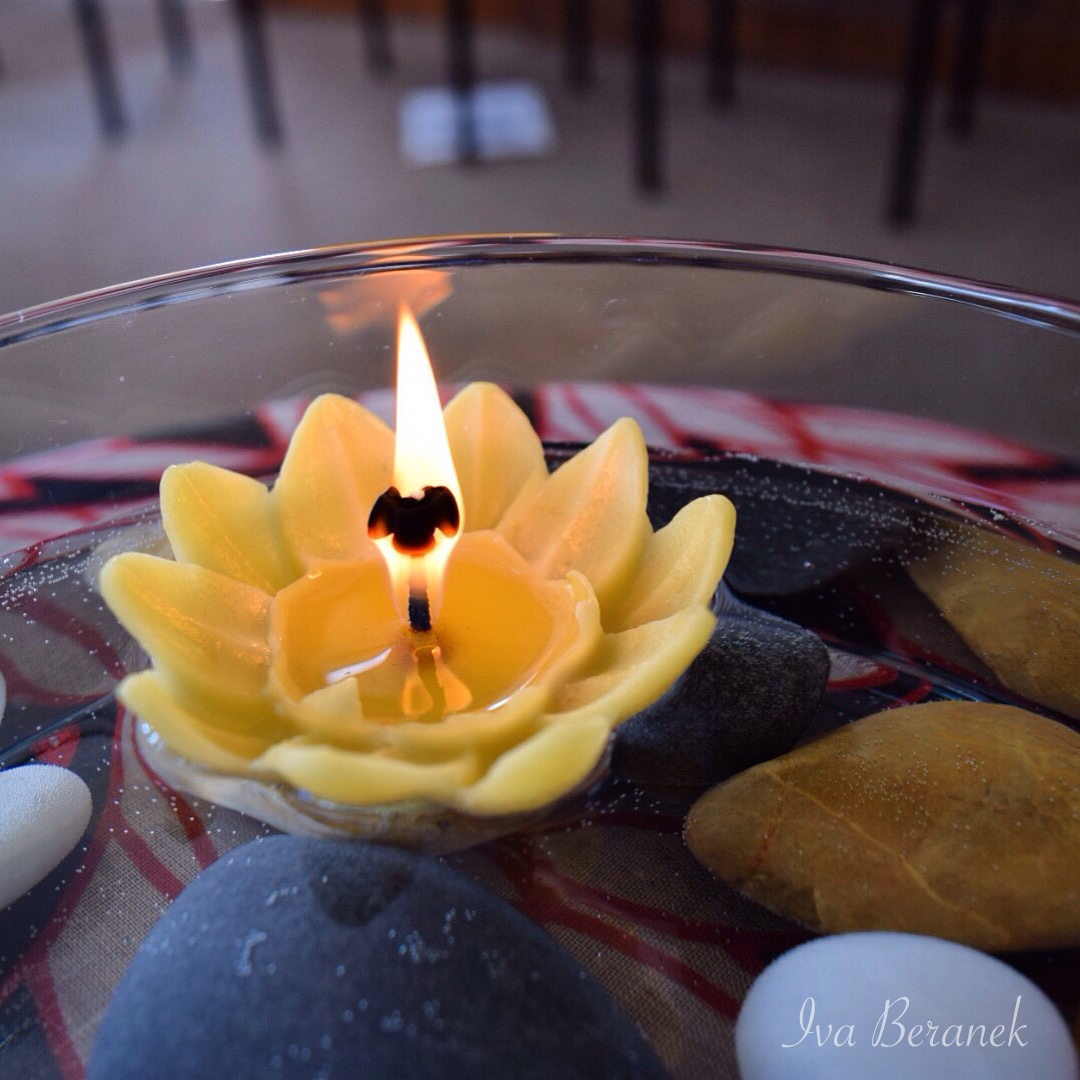
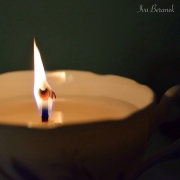
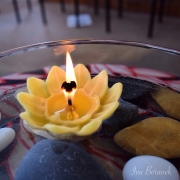
flame

One does not have to have a vocation of a writer in order to taste the healing benefits of writing. It has long been known that keeping a journal helps us to be attentive to the inner movements of our soul and to the deep life learning that each season of life offers us. Life can move quickly, and it is easy to lose a meaningful experience, a life lesson, unless we commit it to paper. Writing about our experiences also gives us a chance to come back to what we have written, to remember and to draw from it at a later stage. 

Some people use journaling to record daily events, but we can go even deeper and use it as a tool to reflect on our life. Writing gives us a chance to slow down and to pay attention to experiences that we can otherwise so easily overlook. If you would like to nurture a reflective dimension in your life, why not take a few minutes each day during this Advent to write about your day. Where did you notice God’s presence? What thoughts, emotions surfaced within you? What prayer was being formed in your depths?  

Writing gives shape to our thoughts. While we can gather many blessings by noting beautiful experiences, God’s graces that we encounter daily, it can be quite healing to take time to journal about painful events as well, such as grief or loss of any kind. Writing gives us a tool to express emotions that we carry within us, instead of keeping them bottled up inside. In this way writing can provide healing and relief. 

In a way writing acts as a mirror; at times while journaling we will write something that we have never thought about before, something we didn’t know we knew or believed. Allow yourself to be surprised with what you write, should that happen. Journaling is a good way to reflect, to pay attention, to observe, to listen, to notice our inner movements and to grow. 

I will leave you with some questions that may help your reflections as you journey through Advent:

Where in my life do I need God’s light to grow?
Did I notice that God is teaching me something new at this moment in time?
What hope have I for this Advent?
What are the ways that I can prepare my heart for the coming of Christ?

You can turn your writing into prayer. God is attentive to what is in your heart, and so be free as you write. The paper will not judge. May you have a truly blessed Advent. 

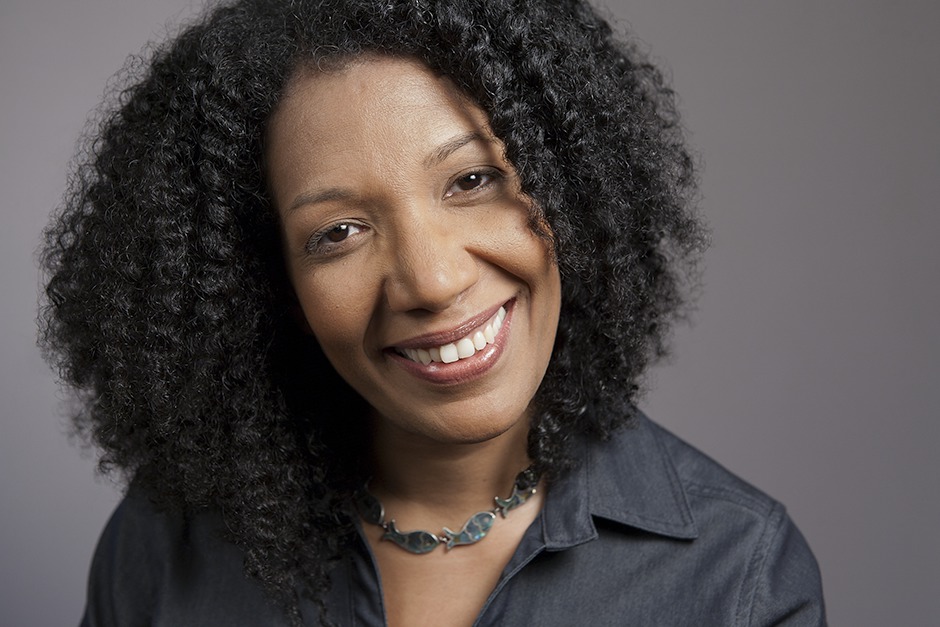
Iva Beranek
Dr Iva Beranek is the Ministry Facilitator for the CMH: Ireland
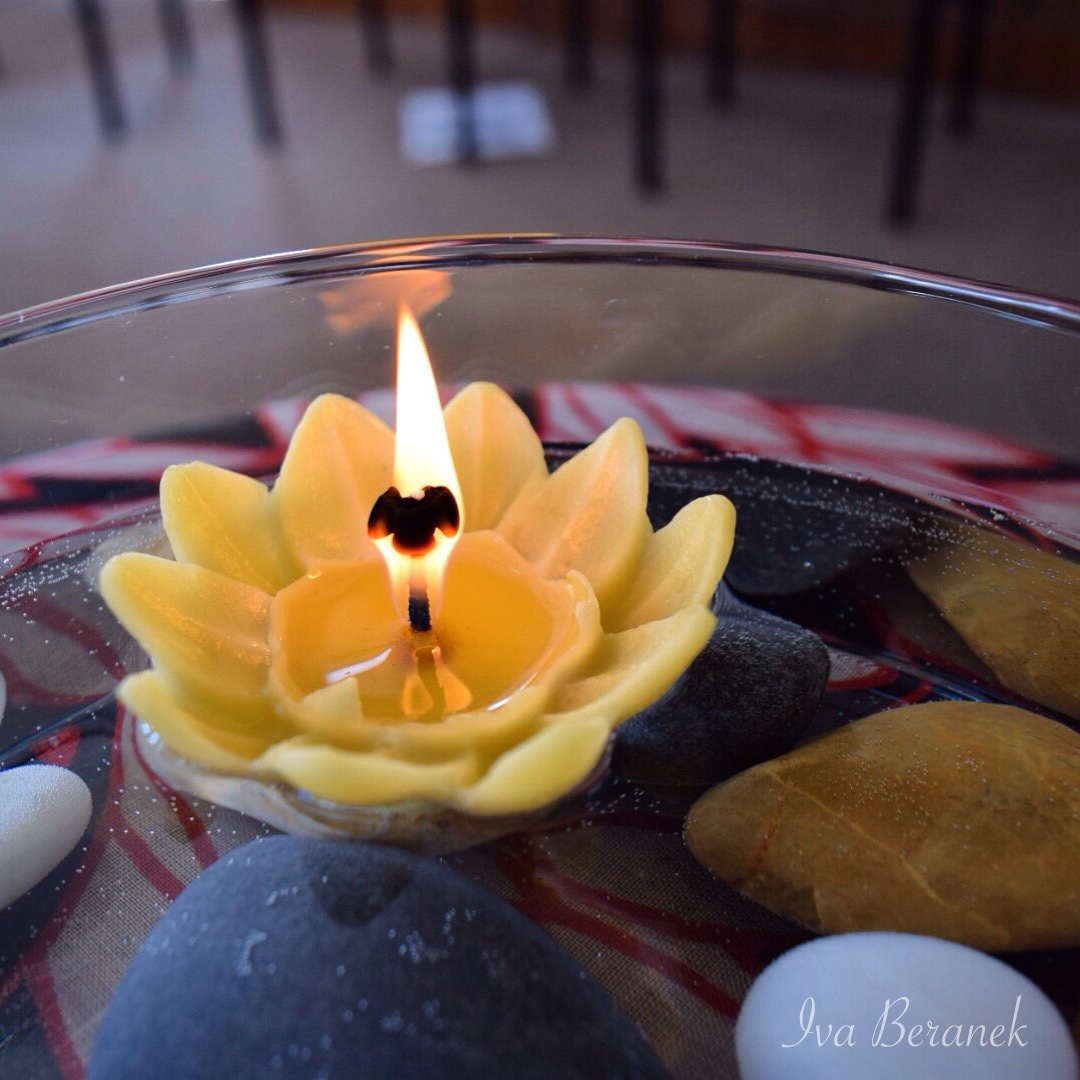
Lodging of the heart

candle - wellspring 2015-05-23 13.03.03-2

At the present hour of history we are living in God’s darkness; His face is eclipsed, blacked out in the present tragedy where millions of people are without a home or homeland.

What can we do?

There is something, as Christians, that we believe we can do, which is important and significant. We can pray, intercede for all those people. And this activity can have the effect of making us more compassionate in a practical way towards our suffering brothers and sisters. The privilege of intercession is a trust committed to all Christians. It is our special prerogative and it is the kind of prayer which brings us into nearest resemblance to Jesus.

“Even the poorest persion, the one weighted down by a burden of sin can pray for another person”, so wrote Edith Stein, “firstly because the Lord is not only just but also merciful”.

Edith Stein was a German Jew, a Philosopher and a Carmelite Saint. She was gassed in the concentration camp in Auschwitz in 1942. She wanted her life and death to be a prayer and intercession for her people, the Jewish race. I mention her because I think she helps us to understand what we are doing when we are interceding for these suffering men and women and children scattered without a home, fleeing from their homeland.  

Edith Stein wrote: 

“I am travelling through the world
to plead for lodgings for the homeless
the people so scattered and trampled.”

She was referring to her own people the Jews who were being persecuted and were fleeing. She prays, “I’ll take them into the lodging of my heart praying secretly and sacrificing secretly. I’ll take them home to my Saviour’s Heart”.

It seems to me that it is something like that that we are doing [when we pray for the refugees and for peace]. We are taking all those people into our heart and brining them home to the heart of Jesus through our prayer. We have access to the Heart of Jesus in prayer, it is for us the place of intimacy, the place of love and warmth, it is home. That is where we are brining all those people – home to the Heart of Jesus in our prayer. So that He may bless them and bondage their wounded hearts.

Hungry for Peace

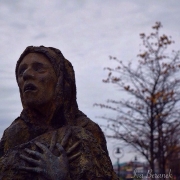
famine memorial OCt 2015-Iva B.

We pray for Refugees.
We pray for the 60 million people who are either internally displaced or who have fled their countries because of conflict, persecution or natural disasters.

We pray for those living in temporary settlements for years on end, in a state of limbo, their lives on hold, hopelessness chipping away at their resolve, who feel forgotten, cast aside, worthless.  We pray for those in Direct Provision in our own country and those in camps on borders around the world.

We pray for people in Bangladesh who have had to flee their homes because of rising seas, land erosion and floods, all caused by our over-consumption and our excessive relentless emissions.  Many of them flee to the cities where they live in squalor and are exploited, often to the point of slavery, by the garment industries, the same ones that provide our clothes.

We pray for people in Argentina, Brazil, Paraguay, Ethiopia, who are becoming displaced from their land and thousands of hectares are being deforested by large multi-nationals to grow cash crops that will then be exported for our food.  Food that we then waste at such a rate that it is estimated Western countries throw away the equivalent of what the entire continent of Africa produces in a year.  We are reminded of Ireland in the 1850s, where 1.5 million people decided that leaving was better than staying to die of starvation, and all the while vast quantities of wheat, oats and barley were being exported out of Ireland to feed the British population. The devastation that food for profit instead of food for survival causes is still imposed on nations today.  Since 2013, the U.S. has sent food aid to South Sudan all the while exporting vast crops from thousands of hectares of land they have acquired in South Sudan for sale supermarkets across America.

We pray for people who are displaced in the Democratic Republic of Congo due to lack of Governance and ongoing civil war. 5 million people have dies since the late 1990s and millions more have been displaced and live in destitution and in fear of militia. These wars have been exacerbated by the mass mining of DRCs natural resources to provide the minerals (cobalt, gold, tin) needed for our phones, our electronics and our jewellery. We pray for those impoverished communities in South Africa who have not fled when international mining companies have set up shop on their doorsteps and are now living in areas ten times more toxic and radioactive than Chernobyl because of uranium dumping.  

In many instances, the destitution that people are fleeing to, bears no thought for what they must be fleeing from. Often the poorest communities bear the brunt of welcoming thousands and tens and thousands of others who have lost their homes.  

So as we pray for refugees worldwide, we recognise our own interconnectedness, our own compliance through relentless consumerism that perpetuates the suffering and displacement of millions around the world.

All of us are on a journey.  None of us have arrived.

We pray that our cry for change would challenge us and move us to respond in a way that we become the answer to our own prayers.  May we be willing to curb our lifestyles and to demand that production and supply of goods promote peace, through food security, land rights and fairly obtained, fairly traded goods.

God is closer to you than your breath. May He bring you peace.
But may He also keep you restless and hungry for the peace of all people.

Disturb us O Lord.  Amen

Prayer Stations at the Vigil for Peace

“There is something in the human spirit that will survive and prevail, there is a tiny and brilliant light burning in the heart of people that will not go out no matter how dark the world becomes.”
(Leo Tolstoy)

Earlier this month we held a Vigil for Peace in Christ Church Cathedral. We prayed for peace in Syria and other countries, and for the many refugees coming to Europe. We are aware that some of you wanted to be there but due to your commitments you were not able to join us in person. Perhaps you joined us in prayer in your workplace, while commuting during the working day, or in whatever situation you found yourself that day. Know that all of our prayers were joined together and like incense they went before God. 

We will share here on our website some of the prayerful reflections that participants offered on the day. We hope that these heartfelt words will spill over to wherever you are and enrich you too, as well as inspire all of us to keep praying. The Vigil for peace was like a lighthouse where we gathered together to pray for peace, and its light is reminding us that prayer is still needed, for the plight of the refugees is ongoing. 

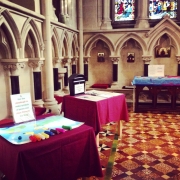
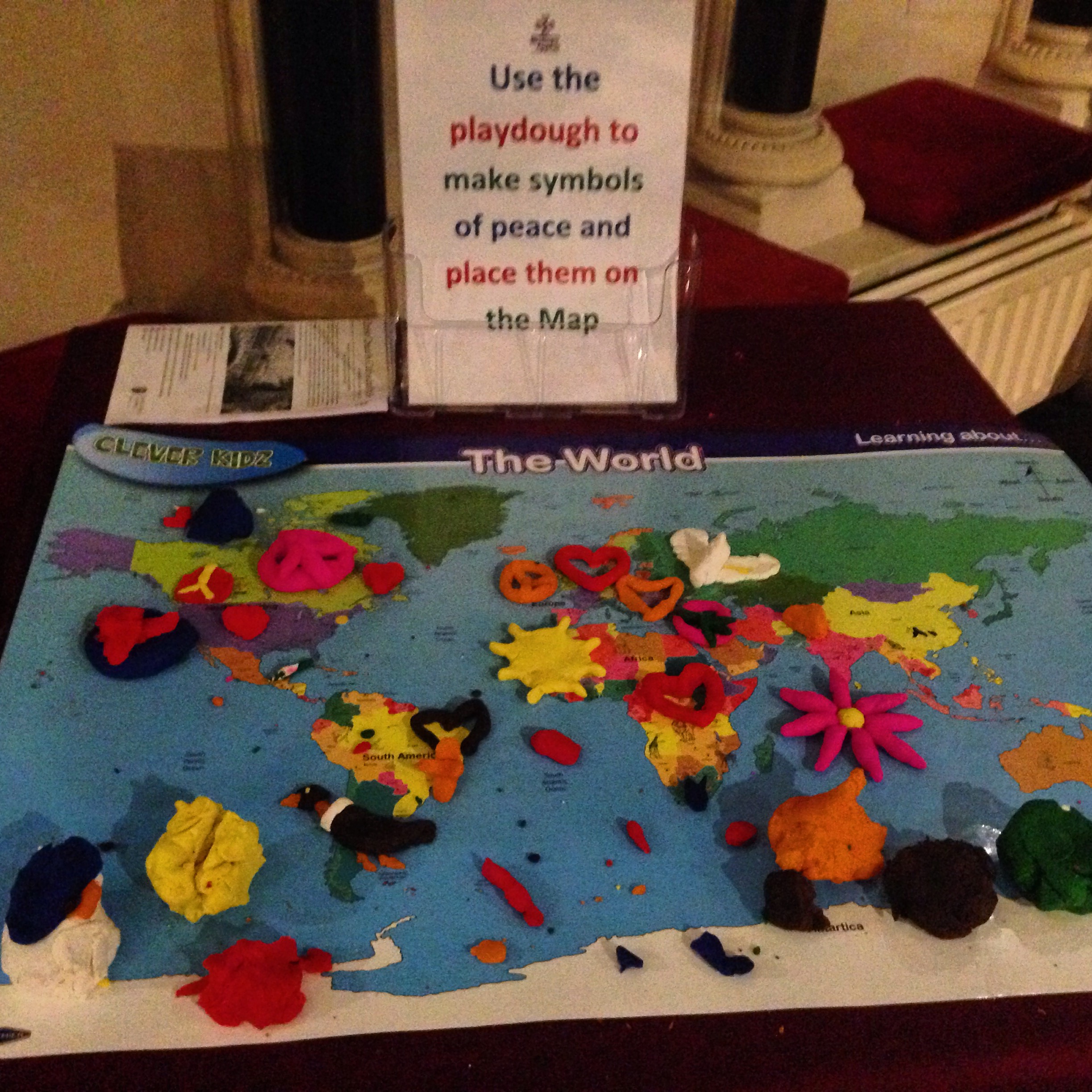
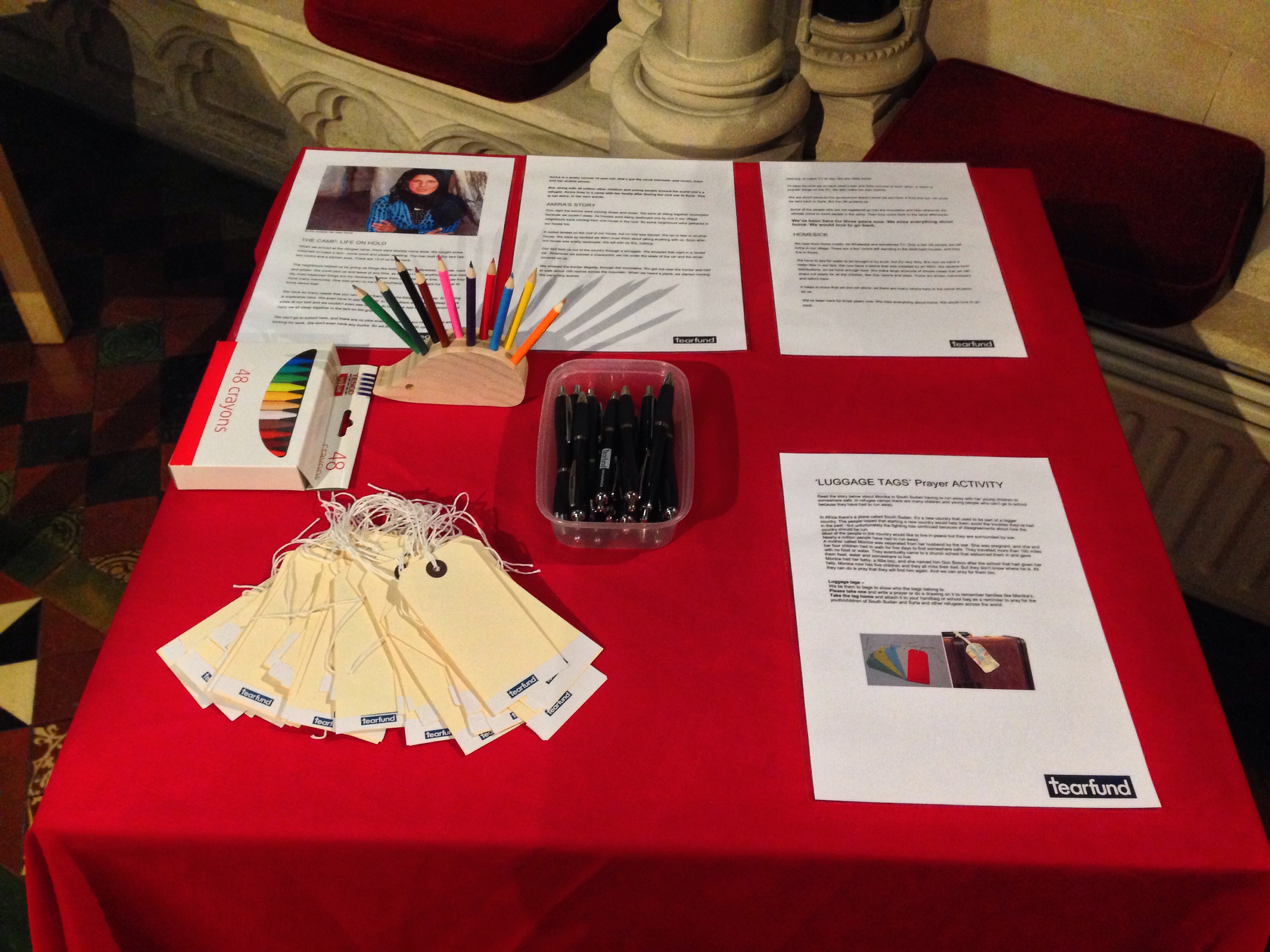
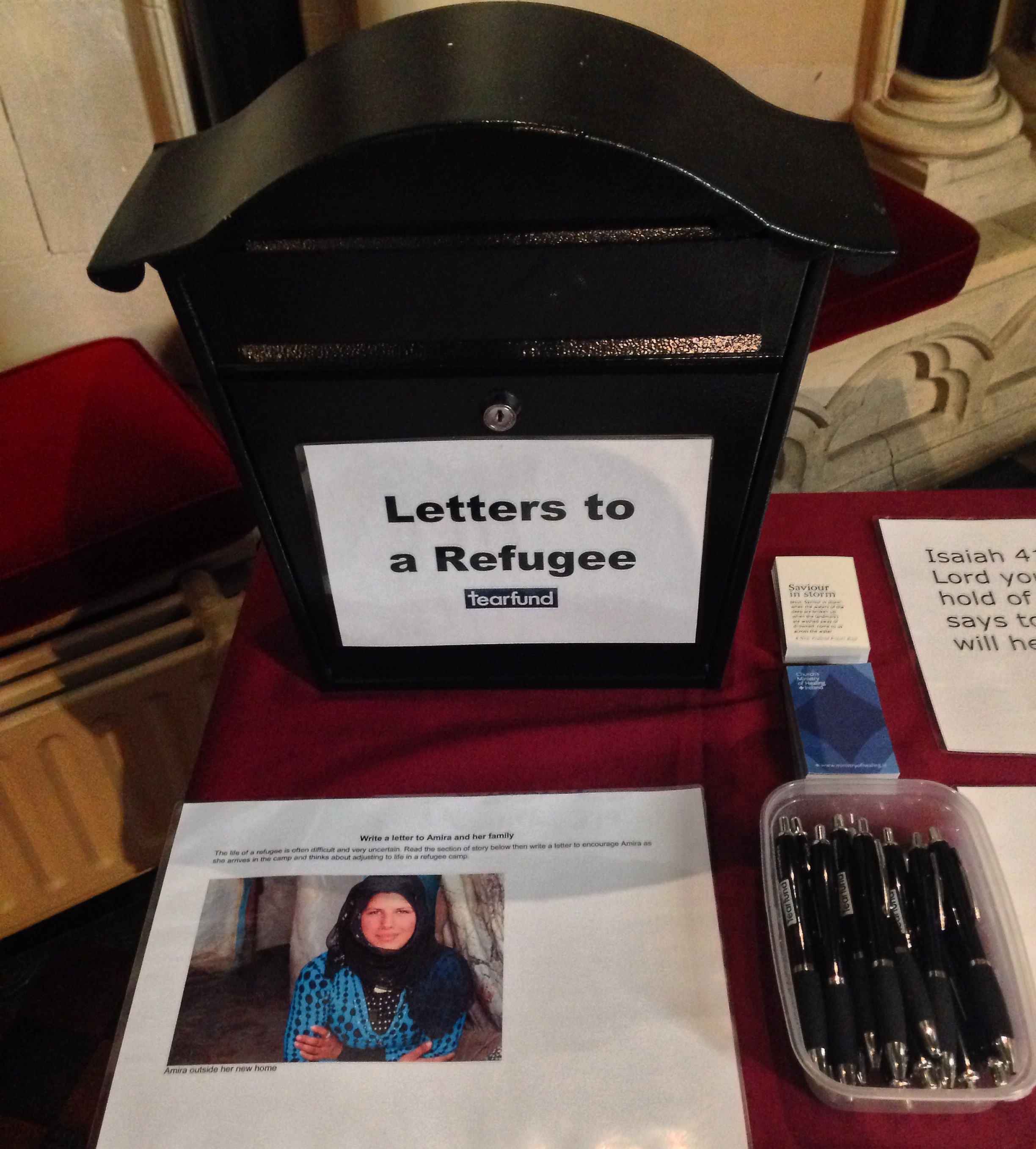
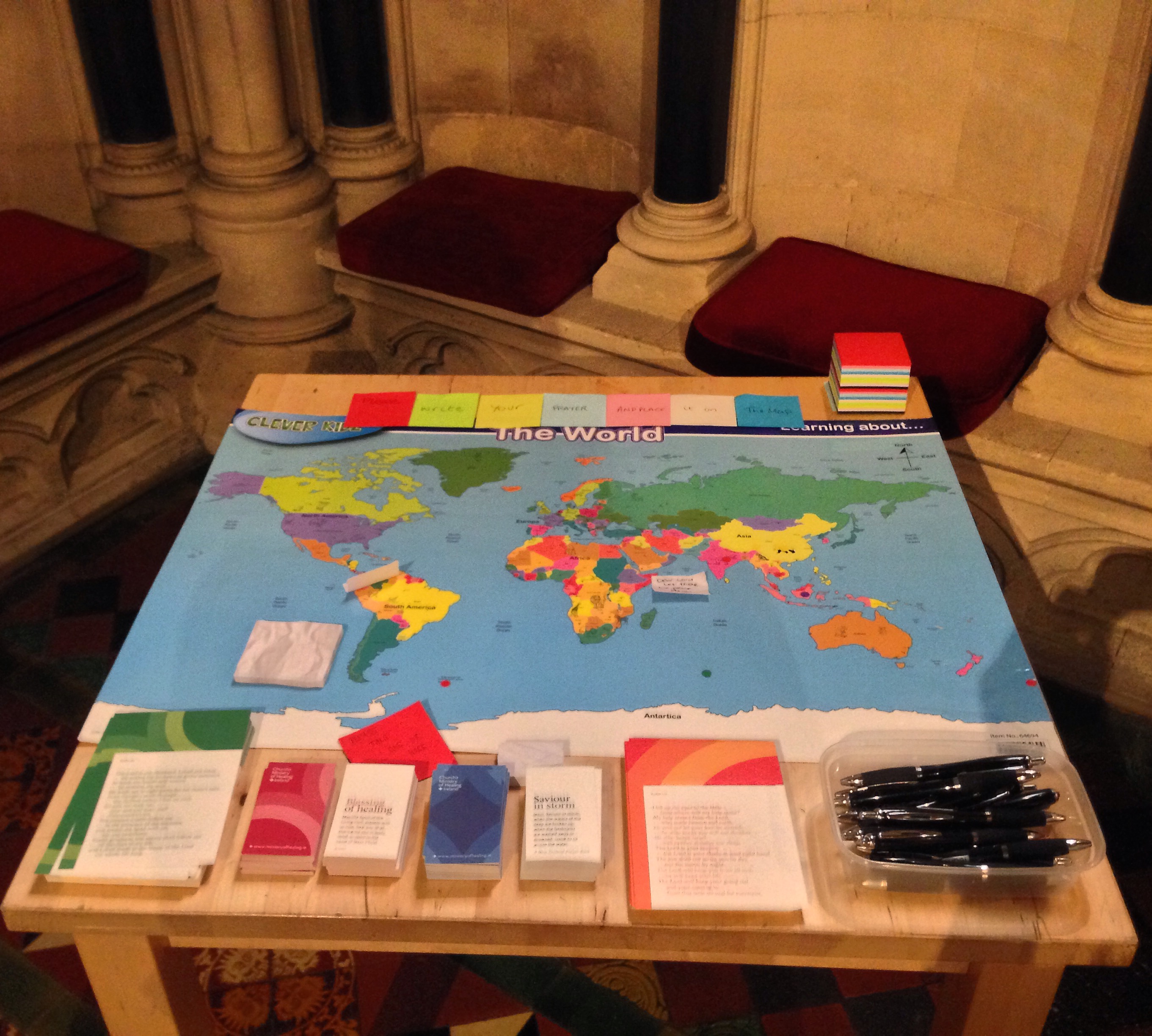
During the day we had interactive prayer stations in the Lady Chapel at the back of the Cathedral to help us engage with prayer in a creative way. We are very grateful to Emma Lynch from Tearfund Ireland, Lydia Monds from the Bishops’ Appeal and the Rev. Abigail Sines for helping us set these up. Visitors and participants found it a very useful tool; the prayer stations were hardly without someone roaming around and praying there. Below you can see images of some of the prayer stations.

2015-10-08 17.18.12-1

2015-10-08 10.51.46 HDR-1

2015-10-08 10.50.12 HDR-1

2015-10-08 10.51.25 HDR-1


Hospitality to angels

 2015-05-23 12.11.18-4
It seems we have made little progress since the 1850s when between 1.5 and 2 million people left Ireland, weighing up their options and deciding that going was better than staying. Many of them also risked their lives on unseaworthy ships.
In the letter to the Hebrews we are told “Do not forget to show hospitality to strangers, for by so doing some people have shown hospitality to angels without knowing it.”
 
When we think of all the various occasions and events of history that have resulted in refugees, we remember all those who have shown hospitality to Angels. Think of those who were refugees and relied on that hospitality. 
 
Few of us in Ireland are untouched by the experience of flight. Family members who came from elsewhere to make their life here, or who have gone by choice or through lack of choice to live elsewhere. 
 
Yes, there can be sadness but there can also be the beauty of diversity, the opportunity for learning, sharing, growth. We are famous as the Ireland of the Welcomes, and for our Cead Mile Failte. Hospitality is a cornerstone of Celtic spirituality. A challenge to us today, to welcome the stranger, to hold our hearts open, and to see the face of Christ in every person.
“I saw a stranger last night. I put food in the eating place, drink in the drinking place, music in the listening place, and in the sacred name of the Triune, he blessed myself and my house and my cattle and my dear ones. And the lark said in her song, ‘Often, often, often goes the Christ in the stranger’s guise.’”

A call to pray for the refugees

2015-08-09 19.12.35-2

“You have to understand, no one would put their children in a boat unless the sea is safer than the land,” wrote the Somali-British poet Warsan Shire in her poem about the refugees leaving their home country. But we are well aware that the sea is not safe. 

The refugee crisis has escalated to a very worrying degree, and we can no longer ignore it. Refugees from Syria, Libya, Iraq and other countries are on the Europe’s doorstep. While some responses to the crisis are encouraging, there are many stories that are in fact disturbing. What can we do? First of all, pray. This may seem like an easy way out or an insufficient response, but it is neither. 

We Christians believe in a God who was a refugee himself. Jesus, when he was still a child, had to flee to Egypt with Mary and Joseph, because it was not safe for them to stay in their home country. Jesus knows on a very personal level what the refugees are going through. In prayer we can ask Jesus to help them as they seek refuge from war. An act of prayer involves trust: we have to believe that our prayer is effective even when we do not know its fruit. We will not know how our prayers in this situation are going to be answered, but we are still called to entrust the people in need to God’s loving care. Maybe our prayers are going to give strength to those who are helping the refugees on the ground, or even inspire action that will create a very practical response. Maybe the prayers will comfort someone who lost a family member in their desire for survival.  

Jesus said, “Truly I tell you, whatever you did for one of the least of these brothers and sisters of mine, you did for me (Matthew 25:40)”. Prayer does not exclude action, on the contrary, a heartfelt prayer often inspires it. Yet even in itself, prayer is valuable. In this case, it has a potential to comfort and sustain people fleeing from war-torn countries not to give up. For many of us even reading the news has been quite overwhelming and it may seem like we are unable to pray vocally. Even sharing in the pain through our heartfelt compassion, with the loving posture of our heart, is a prayer. God can see what is in our hearts, even when words don’t come. 

We would like to invite each of us to keep the refugees and those who have the power to help in your daily prayers. Make the prayer as specific as the Spirit leads you. Maybe even write a list of intentions you will pray for, or simply stand before God with an open heart. 

If while praying, within your heart you recognise stirring to do something, if a prayer leads you to act, may God be your guide. If we each do our little bit, we can do a lot.

Iva Beranek
Dr Iva Beranek is the Ministry Facilitator for the CMH: Ireland
The change of seasons

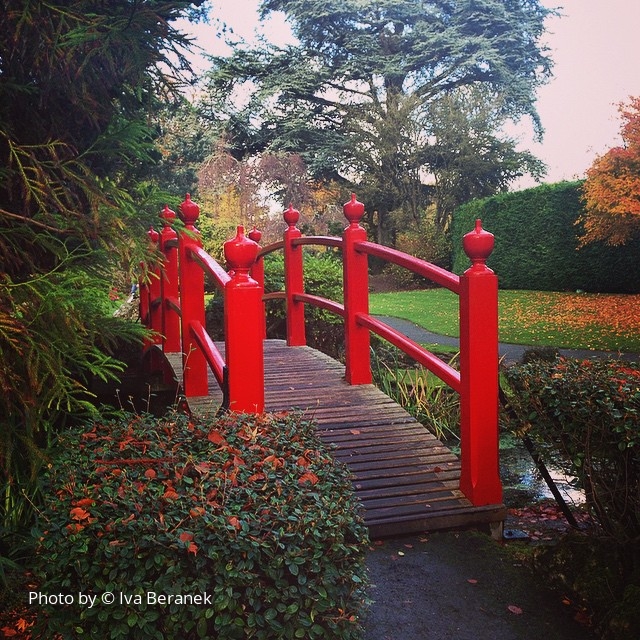
Japanese gardens, Kildare Nov 2014

As the autumn sun warms our streets, we are beginning to cross a threshold into another season of the year. Sometimes the external seasons point towards the seasons of our hearts, the internal ones. While we encounter moments of eternity in our daily living, moments when God shows us His presence among us, a lot of our lives is actually seasonal. 

Try and notice the season you are in, give it a name. Any name. It could resonate with summer, autumn, winter, spring, but it could also be a season of joy, new beginnings, growth, or even a season of grief. Often these seasons overlap. Summer hardly ever finishes on a one day, and lets the autumn start on the next. A dance of seasons is very common, in nature and in our lives also.  

What is the healing that you might need today? Perhaps your prayer is for a deep cry of your heart to be comforted with God’s love. Or maybe it is a gentle desire for rest, a desire for peace, or for something else. Spend some time in the silence of your heart and talk to Jesus about what you need. Wherever there is a need for healing, usually there is an invitation for growth as well. Be attentive to the areas of growth where God is calling you at this moment. 

May the dance of the seasons be gentle for your soul, and may you dance with the Spirit who is always leading you deeper into the fullness of life. 

Iva Beranek
Dr Iva Beranek is the Ministry Facilitator for the CMH: Ireland
On Record: Lisa Sharon Harper on the Image of God

If you missed Lisa Sharon Harper’s address in June, you may be happy to know we recorded it!

LisaSharonHarper-Small-NonStretched

A call to contemplative practice

2015-05-23 13.03.03-2

“I am the vine; you are the branches. If you remain in me and I in you,
you will bear much fruit; apart from me you can do nothing.”
(John 15:5)

In our very vocal and busy culture it can be difficult, if not even countercultural, to dedicate time for silent prayer. It may appear that we are doing nothing, achieving nothing, and going nowhere in particular. Fruits of a rich (inner) prayer life are not gathered instantly. They take time to be nurtured, they take time to become visible and to show. But in this going nowhere we are meeting God, and that is what matters. 

Recently I was at a day event organised by the New Monasticisms Ireland. The speaker for the day was Dr. James Finley, once a monk at the cloistered Trappist monastery in Kentucky, where Thomas Merton was his spiritual director. Dr. Finley spoke about ways to live a more contemplative life in the contemporary world. He encouraged us to find a contemplative practice and to commit to it. “Try a contemplative practice for three months and notice how your capacity increases”, he said. For instance, our capacity to not be so reactive is likely to increase, we should be able to set appropriate boundaries (more easily), and our capacity to love is likely to increase too. Dr. Finley explained that contemplative practice is “any act habitually entered into with your whole heart that takes you to a deeper place”.

Even observing beauty can become a contemplative practice. Becoming aware of the beauty of creation and pausing in order to appreciate it can in itself be an act of gratitude to God who created the world. The act of appreciating beauty can turn into prayer. “Beauty calls us to attention. It slows us down. This, in itself, is the beginning of contemplation” (Macrina Wiederkehr). 

In the Gospel of John, Jesus tells us that if we don’t spend time with Him, we will cut ourselves from the source that is to feed our inner life. Out of this source all our actions are supposed to spring. Dedicating time to prayer, spending time with Christ, pausing to appreciate beauty, all of these are to take us to the source, to the river of life, where our souls can rest in God’s. Then when our unspoken words have been soaked in the silence of prayer, when our actions come out of the hands that know how to bless, we will learn to act more like Christ does. 

Contemplation, same as the Eucharist, call us to action, they call us to respond to the needs that we see in the world. But they call us to action together with God, aware that He is the only true source for healing the world’s ills. Even in our silent prayers we can offer to God situations that stir our hearts. While no one will know it, for it will be done in silence, our prayers will become a means of healing, of sharing Christ with the world. Our doing nothing will turn into ministry. Hopefully, if we practice this through prayer, we will be able to do so more graciously in real-life situations too.

Iva Beranek
Dr Iva Beranek is the Ministry Facilitator for the CMH: Ireland


The encounter with the risen Lord

the empty grave-Hill of Slane

The Gospel gives us a number of accounts where Jesus meets the disciples after the resurrection. The response of surprise, fear, initial lack of recognition and then subsequent ‘aha! moment’ of recognition are quite common. They did not expect the empty grave, they did not expect to meet Jesus again, not so soon; even though He told them about it, they could not understand. And who could blame them, they were grieving. After the night seems long, the light of the dawn will come as a surprise and our eyes will need to get used to it. I have never experienced the polar night, when night or twilight lasts for days or months on end, but I presume that in the hearts and minds of those who loved Jesus, the news of the resurrection must have been somewhat like a new dawn after a very long polar night. 

I think each of the encounters where we read that Jesus meets his disciples, both women and men, are beautiful in their own way. They portray how for us on the human level taking in the story of resurrection is going to be a process. Maybe that is why the Church gives us fifty days of the Easter season to journey with the risen Lord, to get accustomed to this new reality of life, and to hopefully let this reality transform us ever so little year after year. 

What is your favourite resurrection story? I would encourage each of us to spend some time with that story, by reading it a few times, pondering on it, and taking time to prayerfully imagine our own place in the story. What would Jesus tell you, and me, if He came to us today? The risen Jesus sometimes met the disciples behind the closed doors, so if He chose to do the same to us what insight would that bring us? I will not answer those questions, for they can only be answered in the silence of our hearts, but I do wish us all that Jesus may encounter us in a new way this Eastertide, bringing us new life, filled with peace and hope. 

Happy Easter to you All on behalf of the Church’s Ministry of Healing: Ireland!

Iva Beranek
Dr Iva Beranek is the Ministry Facilitator for the CMH: Ireland